Um espaço para partilha de ideias relacionadas com as práticas artísticas
e os seus efeitos terapêuticos, com destaque para a vertente musical

domingo, 5 de agosto de 2012

Music relieves stress of assisted breathing

Patients who need assistance to breathe through mechanical ventilation may benefit from listening to music, a new review published in The Cochrane Library shows. The researchers found that music listening may relax patients, potentially resulting in fewer complications. 

Mechanical ventilation often causes major distress and anxiety in patients. The sensation of breathlessness, frequent suctioning, inability to talk, uncertainty regarding surroundings or condition, discomfort, isolation from others, and fear all contribute to high levels of anxiety. Medications administered to reduce anxiety may lead to increased hospital stays and medical costs. 

"With all these factors making mechanical ventilation a highly stressful experience, it is exciting that music may provide a way to reduce anxiety in these patients without costly side effects," said lead researcher Joke Bradt of the Department of Creative Arts Therapies at Drexel University in Philadelphia and former researcher at Temple University's Arts and Quality of Life Research Center. 


The researchers reviewed data from eight trials involving 213 patients in total. Patients, who had various conditions, including lung disease, cardiac disease and trauma injuries, all received mechanical breathing support via mouth, nose, or tracheotomy (artificial opening in the neck). 

In seven trials, patients listened to pre-recorded music and in the remaining trial a trained music therapist provided live music with a tempo matched to the respiratory rate of the patient. On average, listening to music reduced anxiety compared to standard care. It also reduced heart and breathing rates, although not blood pressure. 

"These results look promising, but we need more trials to strengthen the evidence and we would certainly be interested in seeing more research on live music interventions provided by trained music therapists," said Bradt. "However, because music listening is an easy treatment to provide, we do recommend that music be offered as a form of stress management for critically ill patients." 

Little information was available about the specific kinds of music that produced beneficial effects. "Except for mentioning general styles, such as classical and easy listening, most of the trials made no mention of the music selections used," said Bradt. "In future trials, recording more detailed information about the music would help clinicians make better informed decisions about music selections. We recommend that medical personnel providing music to patients consult with a music therapist to understand what type of music may be best for a particular patient. Likewise, music therapists need to collaborate with medical personnel to carefully monitor the patients' physiological responses to the music."

Info at Phys.Org

sexta-feira, 20 de julho de 2012

Surgery with Music Benefits

Surgeons believe playing a little knife music might benefit patients so much that they recover sooner from their operations.
Mozart was not actually one of the composers that those in the study got to hear. However, they were offered equally soothing pieces by Beethoven, Vivaldi and Bach.
Frank Sinatra was also on hand for those who preferred some easy listening during the operations, which included washing out major wounds.
Hazim Sadideen, the plastic surgeon who led the project at the John Radcliffe Hospital in Oxford, said: "Undergoing surgery can be a stressful experience for patients and finding ways of making them more comfortable should be our goal as clinicians.
"There are also good medical reasons – calmer patients may cope better with pain and recover quicker.
"This small scale work is the first time an attempt has been made to measure the impact music has in this specific group of patients and hints at the need for bigger multi-centre research to establish whether this should become part of standard practice."
In the study, published in the journal Annals of the Royal College of Surgeons, 96 patients undergoing minor surgery were randomly assigned either music or silence. All were awake during their procedures, which included routine removal of skin lesions and cleansing of upper limb wounds after accidents.
The half played music reported lower anxiety levels and lower breathing rates than the others.

sexta-feira, 6 de julho de 2012

Babies' Brains Benefit from Music Lessons, Even Before They Can Walk and Talk

After completing the first study of its kind, researchers at McMaster University have discovered that very early musical training benefits children even before they can walk or talk. 

They found that one-year-old babies who participate in interactive music classes with their parents smile more, communicate better and show earlier and more sophisticated brain responses to music. 

The findings were published recently in the scientific journalsDevelopmental Science and Annals of the New York Academy of Sciences. 


"Many past studies of musical training have focused on older children," says Laurel Trainor, director of the McMaster Institute for Music and the Mind. "Our results suggest that the infant brain might be particularly plastic with regard to musical exposure." 

Trainor, together with David Gerry, a music educator and graduate student, received an award from the Grammy Foundation in 2008 to study the effects of musical training in infancy. In the recent study, groups of babies and their parents spent six months participating in one of two types of weekly music instruction. 

One music class involved interactive music-making and learning a small set of lullabies, nursery rhymes and songs with actions. Parents and infants worked together to learn to play percussion instruments, take turns and sing specific songs. 

In the other music class, infants and parents played at various toy stations while recordings from the popular "Baby Einstein" series played in the background. 

Before the classes began, all the babies had shown similar communication and social development and none had previously participated in other baby music classes. 

"Babies who participated in the interactive music classes with their parents showed earlier sensitivity to the pitch structure in music," says Trainor. "Specifically, they preferred to listen to a version of a piano piece that stayed in key, versus a version that included out-of-key notes. Infants who participated in the passive listening classes did not show the same preferences. Even their brains responded to music differently. Infants from the interactive music classes showed larger and/or earlier brain responses to musical tones." 

The non-musical differences between the two groups of babies were even more surprising, say researchers. 

Babies from the interactive classes showed better early communication skills, like pointing at objects that are out of reach, or waving goodbye. Socially, these babies also smiled more, were easier to soothe, and showed less distress when things were unfamiliar or didn't go their way. 

While both class types included listening to music and all the infants heard a similar amount of music at home, a big difference between the classes was the interactive exposure to music. 

"There are many ways that parents can connect with their babies," says study coordinator Andrea Unrau. "The great thing about music is, everyone loves it and everyone can learn simple interactive musical games together." 


Info from Science Daily 


sábado, 9 de junho de 2012

When words fail, art transforms

An advertising campaign that brings awareness to the growing number of Americans diagnosed with Alzheimer’s and Dementia. The campaigns focuses on how art therapy can improve the overall quality of patients diagnosed with the disease.


"When words fail, art transforms."

It is based on the head is how Alzheimer’s changes the way patients think, the heart represents emotions, and the eye is how their perception of the world changes.


Info at Behance

quarta-feira, 6 de junho de 2012

Makey Makey: turn everyday objects into touchpads

It seems to me that this tool can be promising in the field music therapy!
Take a look at this video!


"What is Makey Makey? MaKey MaKey is an invention kit for the 21st century. Turn everyday objects into touchpads and combine them with the internet. It's a simple Invention Kit for Beginners and Experts doing art, engineering, and everything inbetween. 

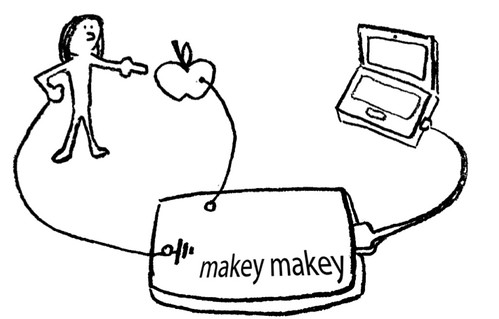
How Does it Work? Alligator Clip two objects to the MaKey MaKey board. For example, you and an apple.


When you touch the apple, you make a connection, and MaKey MaKey sends the computer a keyboard message. The computer just thinks MaKey MaKey is a regular keyboard (or mouse). Therefore it works with all programs and webpages, because all programs and webpages take keyboard and mouse input. 

Who is MaKey MaKey For? 
Artists, Kids, Educators, Engineers, Designers, Inventors, Makers... Really it is for everyone." 


More info at KickStart Makey Makey 

domingo, 3 de junho de 2012

Rivista di Arti Terapie e Neuroscienze On Line - Anno III num. 5 Maggio 2012

Ho scoperto questa rivista - Arti Terapie e Neuroscienze online - Rivista Mensile della telematica sui temi musicoterapia, danzaterapia, arteterapia, plastico pittorica, Neuroscienze e Scienze Umane. 


Nata nel gennaio 2010 ad opera dell'Istituto di Arti Terapie e Scienze Creative di Carmiano, in italiano, con accesso gratuito. Una risorsa preziosa aqui!

sábado, 2 de junho de 2012

Mental illness through art in the next See Me, Hear Me

MACARTHUR region residents are challenging attitudes towards mental illness through art in the next See Me, Hear Me exhibition opening 2nd June.


The Benevolent Society’s annual Campbelltown Arts Centre exhibition will feature until June 12 the artwork of 25 local artists, including Sandi Dennis, living with mental illness. The works will then be on show at local Narellan, Campbelltown, Eagle Vale, Ingleburn and Glenquarie libraries until mid-July.


The Benevolent Society’s Wies Schuiringa said the exhibition gave people living with illness a chance to showcase their skills and step into the limelight.

“We often hear from people living with mental illness that they feel isolated and hidden away, so See Me, Hear Me provides people who live with mental illness an opportunity to have a voice,” Ms Schuiringa said.

“The exhibition not only gives artists an opportunity to show their work and skills, it also gives visitors a chance to see some wonderful local artworks and gain a greater understanding of what’s it’s like to live with mental illness.”

Ms Schuiringa said mental illness was not understood well in the community, but over the past years the exhibition had run, it had proven a powerful way to break down the stigma.

Info accessed at Macarthur Chronicle