Um espaço para partilha de ideias relacionadas com as práticas artísticas
e os seus efeitos terapêuticos, com destaque para a vertente musical

Mostrando postagens com marcador communication. Mostrar todas as postagens

terça-feira, 8 de setembro de 2015

"As a music therapist I can give people back the power to communicate"

"I practised as a full-time music therapist for 20 years, mainly in the field of adult mental health as part of a large NHS mental health trust. It was during this period that I began to combine my clinical role with supporting the development of the profession. Along with another colleague, we developed a new MA course at Anglia Ruskin. This course became the first masters course in music therapy in the UK. I continued to work as a music therapist and today, we have our own new state of the art music therapy centre at Anglia Ruskin, where we not only train students, but also deliver clinical work with local children and adults, as well as lead a pioneering research department.

I have always been passionate about the potential for music to change people, situations, and particularly to help communication when words are not available. I am a singer, pianist and violinist and using live music has been central to my work where music is used to work towards therapeutic change for adults with a variety of mental health problems including dementia, schizophrenia, depression and personality disorder. 

Latest studies show both that music affects the brain positively, and also that regular music therapy sessions reduce agitation and anxiety, and the need for medication for people with dementia. Leaving someone without the power to communicate is not right – music has the power to address that. Music therapy addresses the emotional, physical and intellectual needs of people with dementia and I have just begun talks with the local NHS trust where I work about referring more people with dementia for music therapy."
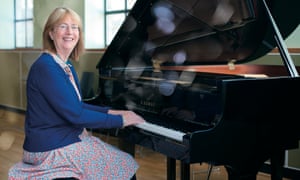
Helen Odell-Miller


Helen Odell-Miller @ The Guardian 


quarta-feira, 12 de agosto de 2015

How music acts as medicine for the soul

Henry, an elderly man living in a US nursing home and largely unresponsive to the outside world, receives a pair of headphones to listen to his favourite artist, Cab Calloway .

The neurologist Dr Oliver Sacks, who's involved with the project, describes Henry as "almost unalive", but as soon as the music starts there's a complete transformation. He starts moving and singing along, becoming animated. "The philosopher Kant once called music the 'quickening art' and Henry has been 'quickened' – he's been brought to life," Sacks says in the video.


But the effect doesn't stop once the music is turned off. Though he's normally unable to answer the simplest questions, Henry now starts speaking about his love for music, how it makes him feel, and singing I'll Be Home for Christmas, remembering every single word of the lyrics. It's almost magical.

There's a charity here in the UK that knows all about how music can transform the lives of those who suffer from autism, dementia, and a whole range of mental health problems. The work of the founders of Nordoff Robbins – Paul Nordoff, an American composer and pianist, and Clive Robbins, a special education teacher – began more than half a century ago, as they used music therapy to help isolated and disabled children. In 1980 the charity bearing their names was established in the UK.

Nordoff and Robbins discovered music's power to open up the senses and "reawaken" people with dementia doesn't only come from the familiarity of favourite songs. In a mesmerising video, one of the charity's music therapists starts communicating with a woman whose dementia has lead to the loss of speech, by doing a sort of singing and guitar-playing call-and-response. In another one, Jack, an autistic boy with severe learning difficulties, lights up and starts to communicate not only by singing, but with his whole body.


But music can also have a calming and healing effect on those with mental illnesses. Nordoff Robbins works with Lance, who lives with schizophrenia and says music therapy makes him "feel more human again" and is "a haven from intrusive bad thoughts and depression".

The charity provides music therapy at his local centre for people with mental health problems, where he plays guitar, often supporting other people's songs. "I feel that music is holding my hand through all this," he explains.

The therapists who go into schools, hospitals, care homes and prisons, help people communicate where words have failed, raising their confidence, self-esteem and sense of joy through music, one of the most powerful remedies that can't be bought from pharmaceutical companies. Music is medicine for the soul.

Info from The Guardian


quinta-feira, 23 de julho de 2015

“Play It Again, Sam”: How the Use of Music is Reawakening the Minds of Many Individuals Battling Dementia.


Written by Robert Maxwell, speech-Language pathologist

To say there has been a recent increase of videos on the web highlighting the power of music with individuals with dementia would be a vast understatement. From caregiver videos flooding YouTube to more carefully crafted films, such as Alive Inside, exploding on the scene, the individual stories being told are nothing short of remarkable.

But what does this mean for us as speech and language pathologists? And what does research say about the overwhelming number of anecdotal stories being touted on the internet? The answer to both questions is, A LOT! Many resources, such as the nonprofit organization MUSIC & MEMORY, now offer an extensive list of research citations that highlight the clinical benefits that listening to music can have on cognition and communication. It’s not just researchers taking notice of the mounting evidence. As the Centers for Medicare & Medicaid Services makes a push to decrease inappropriate use of antipsychotic drugs in long-term care settings, some of its efforts go toward funding personalized music programs to help address agitation and other behavioral concerns in a non-pharmacological way. Many states are also embracing this approach with great clinical outcomes to report.


So do we all switch professions and become music therapists? Of course not. The need for skilled speech therapists to directly target cognitive-linguistic deficits in long-term care settings is more important now than ever as the aging of our population and the dramatic rise in dementing illness converge, but the research and these dramatic personal stories should make us take pause and reconsider the environments in which we practice. As therapists we have a unique opportunity and perspective to be client advocates.

What information can we share, what videos can we show and whose life can we touch to be a catalyst for change in our communities? Consider your impact and take action today. Still need convincing? Let me leave you with one final image. Watch as Naomi Feil, founder of Validation Therapy, makes a power connection with Ms. Gladys Wilson. I wonder how many speech therapy screen forms were sitting in her medical chart stating she was “non-communicative” when this was filmed. 

Info from blog.ASHA