Um espaço para partilha de ideias relacionadas com as práticas artísticas
e os seus efeitos terapêuticos, com destaque para a vertente musical

Mostrando postagens com marcador children. Mostrar todas as postagens

terça-feira, 8 de setembro de 2015

"As a music therapist I can give people back the power to communicate"

"I practised as a full-time music therapist for 20 years, mainly in the field of adult mental health as part of a large NHS mental health trust. It was during this period that I began to combine my clinical role with supporting the development of the profession. Along with another colleague, we developed a new MA course at Anglia Ruskin. This course became the first masters course in music therapy in the UK. I continued to work as a music therapist and today, we have our own new state of the art music therapy centre at Anglia Ruskin, where we not only train students, but also deliver clinical work with local children and adults, as well as lead a pioneering research department.

I have always been passionate about the potential for music to change people, situations, and particularly to help communication when words are not available. I am a singer, pianist and violinist and using live music has been central to my work where music is used to work towards therapeutic change for adults with a variety of mental health problems including dementia, schizophrenia, depression and personality disorder. 

Latest studies show both that music affects the brain positively, and also that regular music therapy sessions reduce agitation and anxiety, and the need for medication for people with dementia. Leaving someone without the power to communicate is not right – music has the power to address that. Music therapy addresses the emotional, physical and intellectual needs of people with dementia and I have just begun talks with the local NHS trust where I work about referring more people with dementia for music therapy."
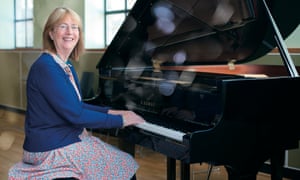
Helen Odell-Miller


Helen Odell-Miller @ The Guardian 


segunda-feira, 13 de abril de 2015

Are musicians better language learners?

Today's economic environment demands that our children become the very best they can be. But not all methods, from flashcards to baby signing, actually boost a child's intelligence, language skills or other abilities for success. Music training is the only proven method to boost the full intellectual, linguistic and emotional capacity of a child. 

According to the studies, just one hour a week of learning music is enough for the full brain benefits to take place – including an all-round boost in language skills and a significant increase in IQ.

In Finland, the average person speaks three to five languages – after all, no one understands our obscure native tongue. But Finland's peculiar custom of early music training where even babies and toddlers learn core music skills through songs and games, may also influence the fluency of foreign-language speaking Finns. As music training boosts all the language-related networks in the brain, we would expect it to be beneficial in the acquisition of foreign languages, and this is what the studies have found.


When children start studying music before the age of seven, they develop bigger vocabularies, a better sense of grammar and a higher verbal IQ. These advantages benefit both the development of their mother tongue and the learning of foreign languages. During these crucial years, the brain is at its sensitive development phase, with 95% of the brain's growth occurring now. Music training started during this period also boosts the brain's ability to process subtle differences between sounds and assist in the pronunciation of languages – and this gift lasts for life, as it has been found that adults who had musical training in childhood still retain this ability to learn foreign languages quicker and more efficiently than adults who did not have early childhood music training.

Humans first started creating music 500,000 years ago, yet speech and language was only developed 200,000 years ago. Evolutionary evidence, as interpreted by leading researchers such as Robin Dunbar from Oxford University, indicates that speech as a form of communication has evolved from our original development and use of music. This explains why our music and language neural networks have significant overlap, and why children who learn music become better at learning the grammar, vocabulary and pronounciation of any language.


Read more in Liisa Henriksson-Macaulay's article @ The Guardian


sexta-feira, 31 de outubro de 2014

Childhood depression maybe cured by music therapy

In the largest ever research of its kind, the scientists have found that music therapy can be a possible cure for depression in children and adolescents having behavioural and emotional troubles.

The study, conducted by the researchers at Queen’s University Belfast along with the Northern Ireland Music Therapy Trust, found that children or teens who received the music therapy treatment showed remarkable improvements in their self-esteem and also reduced their depression symptoms significantly as compared to those who were deprived of the music therapy treatment.

During the study, the researchers also found that those depressed kids who received music therapy had also improved their communicative and interactive skills as compared to those who received usual care options alone.


The research work was conducted between the period March 2011 and May 2014 and involved 251 children and young people who were divided into two groups. The first group included 128 people who were given the usual care options and the second one that involved 123 participants who were also getting an additional music therapy treatment along with the usual care.

All the participants were getting treatment for the emotional, developmental and behavioural problems. The early findings suggested towards the benefits of music therapy that are sustained in the long term.

Dr Valerie Holmes, Centre for Public Health, School of Medicine, Dentistry and Biomedical Sciences and co-researcher, “This is the largest study ever to be carried out looking at music therapy’s ability to help this very vulnerable group, and is further evidence of how Queen’s University is advancing knowledge and changing lives.”

Ciara Reilly, Chief Executive of the Northern Ireland Music Therapy Trust, said, “Music therapy has often been used with children and young people with particular mental health needs, but this is the first time its effectiveness has been shown by a definitive randomized controlled trial in a clinical setting.”

Concluding the study, Reilly said that the findings are dramatic and underline the requirement for music therapy as a mainstream treatment option for the patients suffering from the stress and depression problems.

Written by James Kent at Wall Street OTC 

quarta-feira, 1 de outubro de 2014

Lullabies reduce pain in children, say academics

A study at Great Ormond Street Hospital suggests lullabies do more than just help babies sleep – they reduce pain in sick children

Parents should sing to their children when they hurt themselves as lullabies help to reduce their pain, a study has found. 

Singing Twinkle Twinkle Little Star, Hushabye Baby and Five Little Ducks to sick children was found to alleviate their suffering by researchers at London’s Great Ormond Street Hospital. 

They sang the songs to a group of children under three, some of whom were waiting for heart transplants, and monitored their heart rates and pain perception. 

The scientists then compared this with two other groups, one in which the children had been read to and the other where they had been left alone, and found only those who had been sung to showed a reduction in pain or heart rate.


Professor David Hargreaves of Roehampton University, one of the study’s authors, said the results went further than many parents' intuitive sense that singing lullabies calms children.

"It shows that children can be affected physiologically by music," he said.

He underlined that the research was still in the early stages, but added: "The practical applications are fairly obvious. Music therapists are going to be a lot cheaper than drugs to numb pain."

Professor Tim Griffiths, a consultant neurologist with the Wellcome Trust, told BBC Radio 4's Today programme: “There’s an ancient part of the brain in the limbic system which is responsible for the emotional responses to music.

"What I think is happening here is that the emotional part of the brain is being stimulated by music, more so than the reading stimulus," he said of the study at the London children’s hospital.

“This is decreasing the arousal level, and that in turn is affecting their pain response levels.”

The songs researchers used to reduce pain:
  • Hush Little Baby
  • Hushabye Baby
  • See Saw Margery Daw
  • Donkey Riding
  • Little Fish
  • Twinkle Twinkle
  • Five Little Ducks

terça-feira, 18 de março de 2014

Making music can improve pro-social behaviour and the problem solving skills of young children

Building on existing research (Kirschner and Tomasello in 20102) which found that making music significantly improves pro-social behaviour in young children) the current study investigated not only the potential effects of music making (singing or playing an instrument) on pro-sociability but also its effects on problem-solving and whether there was a difference between boys and girls.

The study, carried out by undergraduate student, Rie Davies, and academics Dr Maddie Ohl and Dr Anne Manyande from the School of Psychology at the University of West London, explored the pro-sociability, co-operation and problem-solving abilities of 24 girls and 24 boys aged four.

The children in the study were randomly assigned to either a 'Music' Group (Group 1) or a 'No Music' Group (Group 2). Children in Group 1 (Music) sang and played the percussion bullfrog and children in Group 2 (No Music) listened to a story. These sequences were then followed by two games a 'Co-operation' game and a 'Helping' game. The children's problem solving ability was tested by observing their reactions during the 'Helping' game.


Music improved helpfulness for both girls and boys with children in the 'Music' group over thirty times more likely to help than those in the 'No Music' group. Girls were over twenty times more likely to help than boys. Making music was also shown to improve co-operation among all the children in the 'Music Group' who were six times more likely to co-operate than those in the 'No Music' Group. Once again girls were even more likely to co-operate after music making than boys. Boys in the 'Music' Group were also four times more likely to problem solve.

Rie Davies said: "This study provides support for prior research by Kirschner and Tomasello (2010)1 and also highlights the need for schools and parents to understand the important role music making has in children's lives in terms of social bonding and helping behaviours. Music making in class, particularly singing, may encourage pupils with learning differences and emotional difficulties to feel less alienated in the school environment."

Info from Science Daily

segunda-feira, 20 de janeiro de 2014

Playing classical music to your child can improve their listening skills later on in life

Susan Hallam, professor of education and music psychology at the Institute of Educadtion, Univeristy of London, evaluated a programme which introduces children aged seven to ten to classical music and its composers. 
The scheme involves a whole school assembly followed by six lessons at class level, with children experiencing different instruments and musical concepts and a formal concert.
Musicians explain what children should listen for and launch question and answer sessions. As the sessions progress, the listening tasks become more complex. 

The programme has been delivered to 4,500 children in 26 primary schools in Hackney and Tower Hamlets, East London, as well as to over 22,000 youngsters in assemblies and concerts. 26 members of staff and 252 children in nine primary schools were questioned about the programme.

Teachers rated developing the ability to listen as the main benefit, followed by musical knowledge and development and the boosting of concentration levels, aspirations, self-discipline and personal and social skills. Some staff also pointed to improvements to English.


One teacher said: ‘The children really enjoy the sessions. I think that listening to music in such an intimate environment (the classroom) engages them and allows them to develop their listening skills.’ Another said that pupils’ communication skills improved.

In a report on the scheme, Professor Hallam said children developed ‘enhanced listening skills and the development of other skills necessary for careful listening to take place including concentration and self-discipline’.

She added: ‘For some of the children the programme was inspirational. The children’s positive reactions suggest that they were ‘open-eared’ and had not developed prejudices against classical music. We know that preferences for music are affected by the extent to which individuals are exposed to them, the greater the exposure the greater the liking. Opportunities to listen extensively to classical music in the early years of primary school are therefore likely to lead to children appreciating a wider range of music than might otherwise be the case.’

Meanwhile a study from the University of St Andrews, Fife, Scotland, last September suggested that musicians have sharper minds and are less likely to suffer a mental decline.
Researchers said that mastering instruments such as the piano, flute or violin improves people's ability to pick up mistakes and fix them quickly. They perform tasks faster and do not allow occasional slip-ups to derail them due to their hours of practice.
The study indicated that playing an instrument could protect against a deterioration in mental abilities through age or illness.

Info from DailyMail


domingo, 17 de novembro de 2013

Photos of children and animals that encourages therapy through animals

Photos of children and animals at a hospital in Michigan that encourages therapy through animals. 

In September 1956, LIFE photographer Francis Miller visited the children at the University Hospital in Ann Arbor, Michigan, to document the hospital’s animal therapy program, which had already been in operation for over 30 years.

At the time, the hospital treated about 3,000 children every year, and the staff operated a “perpetual animal show” to help ease their pain and anxiety.

So wonderful, anything that can put a smile on the face of a kid in hospital is more than worthwhile!

A nurse brings a puppy to a child. Source

A nurse helps a child cuddle a duckling in a towel. Source

Nurses help the kids bathe a baby pig. Source

A little girl looks at a pool of ducklings while receiving tests. Source

A little girl is held up to pet and feed a kitten. Source

1956, by Francis Miller for LIFE.


sábado, 24 de agosto de 2013

Music Therapy for Children with Language Impairments


“I would teach children music, physics, and philosophy; but most importantly music, for the patterns in music and all the arts are the keys to learning.”
Plato
 
Music as a therapeutic intervention is effective in healthcare and educational settings for children and adults. Music interventions can promote wellness, improve communication, and engage cognitive functioning. Children who had received musical training were shown to have improved speech segmentation abilities, according to research published in the journal Cerebral Cortex.
 
Speech segmentation is the process of identifying boundaries between words and syllables, and the ability to extract words from continuous speech. Recent research has found that musical expertise facilitates speech segmentation in adults. Musicians were shown to score better in both musical and linguistic tests compared to non-musicians. The results from this study were taken as evidence that musical training facilitates improved speech abilities, and led researchers to examine whether there is a similar correlation between music and children with learning impairments.

 
In this study, a longitudinal measurement was designed to follow 8-year-old non-musician children over the course of two school years. Children were enrolled into three experiment groups; none of them had been involved in music or painting lessons before or during the study. One of the experimental groups consisted of painting lessons rather than musical training to understand whether music training had any advantage in improving speech abilities.
 
Each group went through an initial “test session,” in which participants listened to 5 minutes of a sung artificial language. After listening to the song, participants were presented with two spoken items and were asked to decide which item sounded more familiar. One group of children were assigned to music and the other to painting classes for 45 minutes, twice a week in year one and once a week in year two.
 
Music training was shown to improve children’s speech segmentation abilities while children in the painting group did not exhibit improved abilities. The findings are important in understanding children’s language development, because speech segmentation is one of the building blocks of language acquisition.
 
Parents and teachers should consider the implications musical training has as a therapeutic method for children and the encouragement it can provide in the acquisition of new skills.
 
Journal reference: François, Clément, Julie Chobert, Mireille Besson, and Daniele Schön. 2013. “Music Training for the Development of Speech Segmentation.” Cerebral Cortex 23(9):2038–43.