Um espaço para partilha de ideias relacionadas com as práticas artísticas
e os seus efeitos terapêuticos, com destaque para a vertente musical

Mostrando postagens com marcador language. Mostrar todas as postagens

segunda-feira, 13 de abril de 2015

Are musicians better language learners?

Today's economic environment demands that our children become the very best they can be. But not all methods, from flashcards to baby signing, actually boost a child's intelligence, language skills or other abilities for success. Music training is the only proven method to boost the full intellectual, linguistic and emotional capacity of a child. 

According to the studies, just one hour a week of learning music is enough for the full brain benefits to take place – including an all-round boost in language skills and a significant increase in IQ.

In Finland, the average person speaks three to five languages – after all, no one understands our obscure native tongue. But Finland's peculiar custom of early music training where even babies and toddlers learn core music skills through songs and games, may also influence the fluency of foreign-language speaking Finns. As music training boosts all the language-related networks in the brain, we would expect it to be beneficial in the acquisition of foreign languages, and this is what the studies have found.


When children start studying music before the age of seven, they develop bigger vocabularies, a better sense of grammar and a higher verbal IQ. These advantages benefit both the development of their mother tongue and the learning of foreign languages. During these crucial years, the brain is at its sensitive development phase, with 95% of the brain's growth occurring now. Music training started during this period also boosts the brain's ability to process subtle differences between sounds and assist in the pronunciation of languages – and this gift lasts for life, as it has been found that adults who had musical training in childhood still retain this ability to learn foreign languages quicker and more efficiently than adults who did not have early childhood music training.

Humans first started creating music 500,000 years ago, yet speech and language was only developed 200,000 years ago. Evolutionary evidence, as interpreted by leading researchers such as Robin Dunbar from Oxford University, indicates that speech as a form of communication has evolved from our original development and use of music. This explains why our music and language neural networks have significant overlap, and why children who learn music become better at learning the grammar, vocabulary and pronounciation of any language.


Read more in Liisa Henriksson-Macaulay's article @ The Guardian


terça-feira, 10 de fevereiro de 2015

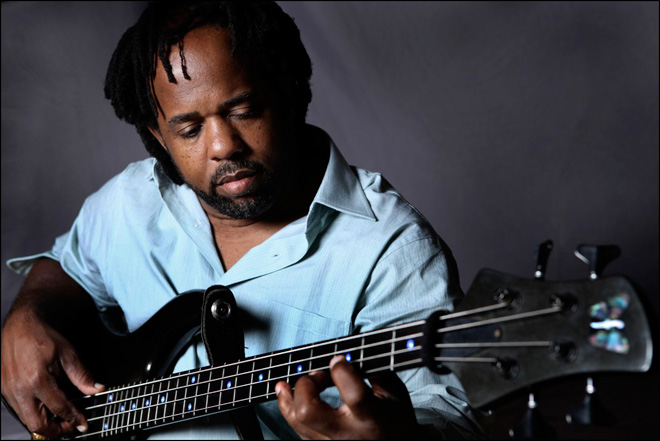
Music as a language - Victor Wooten

Music is a powerful communication tool - it causes us to laugh, cry, think and question. Bassist and five-time Grammy winner, Victor Wooten, asks us to approach music the same way we learn verbal language - by embracing mistakes and playing as often as possible.


Info from TEDed Lessons worth sharing
NOTE that this video has subtitles available in portuguese!

sexta-feira, 30 de janeiro de 2015

12 Amazing things scientists discovered about MUSIC - part I

In 2014, scientists looked closer than ever before at why exactly music makes us feel so powerfully. And they found some amazing and unprecedented things.

Studies revealed that music can shape our personalities and behaviors. It can help us choose our sexual partners. And it can be used to cure certain ailments. The deeper researchers dig, the more we realize how powerful of a force it truly is. 

And these findings could not have come at a more perfect moment in time: School systems continue to slash arts and music budgets around the country and the war over how much we pay for music is fundamentally a question of how much we value music. In this crucial year, scientists delivered infallible reminders of what any music lover already knew: Music is more than just entertainment. 

Here are 12 amazing things we discovered about MUSIC this year:

1. Learning an instrument at a young age can provide improved executive function.

Researchers at Boston Children's Hospital found that early musical training helps children improve their executive functions. Executive functions are incredibly important; they enable people to retain information, regulate behavior and solve problems more effectively. 

Children that started playing music at age 6 showed enhanced activation in the prefrontal cortex, the part of the brain that owns executive functions. And they performed far better than control groups on tests requiring them to shift between mental demands. Executive functioning is also a "strong predictor of academic achievement, even more than IQ," said study senior investigator Nadine Gaab. "Our findings suggest that musical training may actually help to set up children for a better academic future."


2. Rhythmic ability has been linked to language learning.

One of the first skills that children need to acquire when learning to read and speak is how to pick up on the rhythms of speech. They gain this ability to detect rhythms and define boundaries between words and syllables long before they can actually speak. So having a good sense of rhythm is very important to learning language. This year, we discovered just how important it really is.

Developmental psychologists at Northwestern University found that testing children for this rhythmic ability is a good way to detect potential language-based disabilities that may hit children later in life. Those that can hold an even drum beat score also higher on early language tests. The study's authors suggest that parents and educators use rhythmic tests to try to identify and address any possible linguistic deficiencies while children's brains are still young and malleable.


3. Music training can help close the achievement gap.

Nina Kraus, a Northwestern researcher also involved with the previous study, found that music can be vital in helping schools close the achievement gap — the massive inequality in academic performance between students from different socioeconomic backgrounds.

Kraus studied the neural activity of kids beginning their music education while working with the Harmony Project, a nonprofit after-school program that teaches music to children in low-income communities in Los Angeles. Using EEGs, Kraus found that brainwaves of disadvantaged children were "noisier, weaker and more variable" in responding to verbal stimuli than children from more privileged backgrounds. 

But after two years of musical training, she discovered something very different. She found that students with musical training had gotten much better at making clear neural responses to consonants and vowels. This faster processing power will likely have huge benefits for these children's language acquisition and concentration. Music might be one of most effective ways to help give children from disadvantaged backgrounds the cognitive tools they need to escape poverty.


4. It can combat ADHD.

Three scientists from the University of Graz uncovered a startling pattern in a recent longitudinal study investigating what musical learning does to a brain's plasticity. It turns out that kids who learn music boasted significantly thicker grey matter in brain areas linked to attention and concentration. The kids also demonstrated enhanced right-left hemispheric synchronization, which led to high scores on attentional, linguistic and literacy tests. 

In short, musical training builds the same brain structures that are markedly deficient in neural scans of children suffering from ADHD. The scientists hypothesized that early music training can be major benefit to helping children reduce the negative impacts associated with ADHD.

Info from Music.Mic

domingo, 28 de dezembro de 2014

Charles Limb: Your brain on musical improvisation


Musician and researcher Charles Limb wondered how the brain works during musical improvisation — so he put jazz musicians and rappers in an fMRI to find out. What he and his team found has deep implications for our understanding of creativity of all kinds.


Info from TED

terça-feira, 22 de julho de 2014

Seven Ways That Music Benefits Your Health - part II

Lets see the effect music can have on a physical/ mental and psychological level. Take a look at the first part of this post here;

4) Makes you Happier
Music affects our emotional state, making you feel happy, ecstatic or even sad. According to a study, your brain releases dopamine, a feel-good chemical, when you listen to tunes that move you. Sometimes you also experience feeling of shivers or chills while listening to a particular track, this shows that brain releases large amount of dopamine, that gives you happiness and pleasure. So listening to music gives us the same hit of happiness that we would get from a piece of chocolate, sex or drugs.

While another study shows that Music with a quick tempo in a major key, brought about all the physical changes associated with happiness in listeners. In contrast, a slow tempo and minor key led to sadness.


Even when we listen to happy music with the intention to feel happy, it always works as opposed to simply listening to music without attempting to alter our mood.

5) Boosts your immune system and reduce Pain
Music has been found to reduce the levels of stress hormone, cortisol, which can weaken the immune system and is responsible for many illnesses. If you like to dance to uplifting music, then you are definitely on a path to better health. Scientists found that after listening to just 50 minutes of uplifting dance music, the levels of antibodies in participants’ bodies increased.

Different types of music might have different effect, but it also depends on your personal preference and what tunes resonate with your soul. What resonates with the spirit, does have a healing effect.

6) Reduces Depression and Anxiety
Listening to music has much more effect on the human mind and psyche. Researchers say that it can helpease anxiety among cancer patients, have positive effects on their mood, pain and improve quality of life. Researchers from Drexel University found that cancer patients who either listened to music or worked with a music therapist experienced a reduction in anxiety, had better blood pressure levels and improved moods.

7) Keeps an aging brain healthy
Having musical training could help keep the brain healthy as people grow older. Any kind of musical activity in life serves as a challenging cognitive exercise, making your brain sharper and more capable of dealing with challenges of aging.

Even someone with brain damage or dementia can recover memories through listening to music. It is ingrained in our deepest core of being, no matter the language, the sound and the rhythm resonates deep within. Like Kahlil Gibran puts it, “Music is the language of the spirit. It opens the secret of life bringing peace, abolishing strife.”

Info from The Mind Unleashed

segunda-feira, 21 de julho de 2014

Seven Ways That Music Benefits Your Health - part I

“I think music in itself is healing. It’s an explosive expression of humanity. It’s something we are all touched by. No matter what culture we’re from, everyone loves music.” 
Billy Joel


From reducing stress levels, to elevating your current state of consciousness, or taking you in a state of trance – it opens the doors to newer dimensions – dimensions which can only be accessed in a certain state of mind.

Music seems to be part of our biological heritage, because infants have excellent musical abilities, that’s why many to-be mothers sing to their unborn child, because they respond/dance to different types of music.

No human culture on earth has ever lived without it: Music has been used across different cultures for healing purpose. In ancient Greece, music was used to ease stress, promote sleep, and soothe pain. Native Americans and Africans used singing and chanting as part of their healing rituals, like the shamans. Even the Chinese character for medicine includes the character for music. Music and healing goes hand in hand.

Lets see the effect music can have on a physical/ mental and psychological level: 

1) Improves your visual and verbal skills
Early music education stimulates a child’s brain, leading to improved performance in verbal intelligence. This was suggested in a study among 4-to 6-year-olds who received only one month of musical training. It included training in rhythm, pitch, melody, voice and basic musical concepts, and this proved to have a “transfer effect,” enhancing their ability to understand words and explain their meaning.

Another study among 8 to 11-year-olds found that those who had extra-curricular music classes, developed higher verbal IQ, and visual abilities, in comparison to those with no musical training.

Even one-year-old babies who participate in interactive music classes with their parents smile more, communicate better and show earlier and more sophisticated brain responses to music.

2) Affects the heartbeat, pulse rate and blood pressure
As Nietzsche, said, ‘We listen to music with our muscles.’ Studies have proved that music can not only strengthen the heart but also improve the recovery of patients suffering from heart disease.

No matter the genre of music, listening to one’s favorite music releases endorphins in the brain that improves the vascular health. (Opera, classical and other types of ‘joyful’ music were more likely to stimulate endorphins as opposed to heavy metal)

At Abbott Northwestern Hospital in Minneapolis, men and women who listened to music soon after undergoing cardiac surgery were less anxious and reported having less pain than those who just rested quietly.

At Massachusetts General Hospital, a nurse-led team found that heart patients confined to bed who listened to music for 30 minutes had lower blood pressure, slower heart rates, and less distress than those who didn’t listen to music.

The rhythm, the melody and harmony, all play a role in the emotional and cardiovascular response.

3) Improves sleep quality in students
Young or old, we all face sleep problems, in some cases, regularly, in other cases, when we’ve had an overactive day. Listening to soft music is indeed relaxing, hence improving the quality of your sleep.
Research shows that music can help reduce several factors known to interfere with sleep (including stress and anxiety), promote physical changes that support more restful sleep (such as lowered heart and respiratory rates), and aid in treatment of Insomnia.

segunda-feira, 2 de dezembro de 2013

Music Therapy, What does it Look Like and How Does it Work?

While surfing the Internet I found this amazing explanation by a Music Therapist:

Written by Antoinette Morrison, BackMountainMusicTherapy


"Often, people who have not previously heard of Music Therapy hear that I am a Music Therapist and ask “So, what do you do? Play music to them?” (My clients). I think we are so accustomed to teaching methods that something other than that such as facilitating is hard to conceptualize.

Because music is structure over time, what one may see in my therapy room is not what some people may expect. It certainly does not look like a classroom scenario. In fact, upon walking by, glancing in, it may look unstructured or chaotic. A child may be hopping up and down or running back and forth screaming. So what is going on? How can this be therapeutic?

Any good therapist begins where a client is, and all behavior (once again) is communication. I may not know why my client jumps or screams but what I do know is that they are communicating something about themselves. I mirror musically anything they do. I do this to play back to them, giving them a musical portrait of themselves. It may not be by typical standards what you would consider “beautiful” music.

This a simple musical motif or phrase, something that the client is already doing or communicating that is not only being reflected back but being given structure through the rhythm. What is the point of that you may ask.

(...)

When a child can come in with what seems like chaos and have it fit into a structure (rhythm) just as the chaos exists (jumping, screaming, running) and it is okay as it is, we have the beginnings and basis for reciprocity. Life begins and development occurs with the give and take, the back and forth of relationship. What is it that these kids need most?

Music is the universal language. Music’s rhythm and repetition provides structural and predictable basis for reciprocity. Sound is vibration which does not make even hearing a necessary must in order for the brain to process music.. In other words music can be open enough to include the ornamental chaos and predictable enough to give it structural basis for back and forth relating."


quarta-feira, 27 de novembro de 2013

Music, Language & Learning

One might ask, why do music, language and learning complement each other?

Without getting into the neuroscience of music and brain theories, the simple answer is that music involves or stimulates both sides of the brain, and when both hemispheres are engaged, we tap into more potential for cognitive growth or learning.
The other great aspect of music is that it’s auditory, visual, vocal, tactile and physical, and the more senses that are involved in an activity, the greater the capacity for learning and retention.
In a nutshell, one could say that music is an effective teaching strategy, and teaching strategies make learning highly transferable!


Music stimulates both sides of the brain, and when both hemispheres are engaged, we tap into more potential for learning. 
Music is a multi-sensory experience, and the more senses that are involved in an activity (e.g., hearing, seeing, doing), the greater the capacity for learning and retention. 
Music is universal and is accessible to anyone, regardless of age, gender, culture, intellectual or physical ability. 
Music is structured, predictable, and repetitive, and these components are all essential parts of promoting speech and language skills. 


Info from TheSpeechStop