Um espaço para partilha de ideias relacionadas com as práticas artísticas
e os seus efeitos terapêuticos, com destaque para a vertente musical

domingo, 24 de maio de 2015

Stressed? This Dog May Help

Each morning, Cali, an 18-month-old Rhodesian Ridgeback, patiently waits for the K-12 students to pass through the doors of the Calais School in Whippany, N.J. As they walk by, Cali sniffs each one. Cali is a cortisol detection dog, trained to detect the stress hormone our adrenal glands secrete when we become anxious or stressed.


When we are agitated, cortisol levels in our bloodstream rise. It’s Cali’s job to let Casey Butler, her handler, know if a student’s cortisol levels are high. If they are, that student spends time talking with Ms. Butler and Cali to help defuse the stress. “The children feel safer with Cali around,” she explained. “They tend to open up more.”

Many of the students at Calais are on the autism spectrum; some have attention deficit disorder, oppositional defiant disorder and other challenges that can trigger anxiety and other difficult emotions.

Like most service dogs, Cali is extremely quiet and unassuming. “The students don’t like it when a dog jumps on them,” explained Ms. Butler, a health teacher who is a certified specialist in natural canine behavior rehabilitation and in animal adaptive therapy.

Cali was brought to the school last year from a local nonprofit called Merlin’s Kids that trains service dogs to work with special-needs children. “Some schools with a special-needs population have service dogs that visit and work with the students as a once-in-a-while activity,” said David Leitner, executive director of the Calais School. “We thought having a service dog on staff would benefit our students.”

It was a decision that was presented to the teachers and staff at the school, and met without opposition. “A lot of us know people with service dogs, and we have seen how beneficial they are,” said Diane Manno, the principal at Calais. “And in just a short time, we have seen how Cali has helped our students.”

When Cali spots an anxious student, and Ms. Butler asks the student whether he or she is feeling stressed, the typical response is “I’m O.K.” Ms. Butler counters by saying, “Cali told me otherwise.”

A ninth grader agreed. “Cali can help us cope with our problems so that we don’t have to get through it by ourselves,” she said. “She is loving, intuitive and goofy.”

A few weeks ago, in Ms. Butler’s office, Cali started pacing, alternately moving toward the door and nudging Ms. Butler. “She led me up one flight of stairs to the opposite end of the building, where we found a girl starting to have a meltdown,” she said.

Noticing Cali, the student asked if she could pet her. Ms. Butler told her not yet. “I first make sure Cali is safe,” she said. “Within a few minutes of seeing Cali, the student calmed down.” Only then does she reward students by letting them pet, brush and — sometimes — walk Cali.

It’s their uncanny sense of smell that allows dogs like Cali to detect rising cortisol levels in our sweat or breath, and identify a student having trouble even in a faraway classroom, said Nicholas Dodman, director of the Animal Behavior Clinic at Cummings School of Veterinary Medicine at Tufts University. “Humans have 12 million smell receptors in their nose. At the lowest estimate, dogs have 800 million. Scent hounds like beagles and bassets have up to four billion. A dog’s ability to smell odors is beyond our comprehension.”

Cali takes part in story time. Credit The Calais School 
At the end of the school day, the students board the buses back home, and Cali goes home with Ms. Butler. In a few weeks a second service dog will join the crew, a beagle named Cleo, an occupational and speech therapy dog. The students will work with Cleo to improve their fine motor skills by opening and closing the buttons and snaps on her harness, and will practice their oral and social skills by reading to her.

terça-feira, 12 de maio de 2015

Como a música pode melhorar a saúde

Usada como terapia, a música é capaz de melhorar a concentração, alterar o estado de espírito e ajudar a combater algumas doenças.

O Daily Mail reuniu alguns dos mais recentes estudos que comprovam o quão poderosa pode ser a música na saúde e na mente. Algumas melodias possuem efeitos mais notórios do que outros, mas a verdade é que a música é já usada como terapia no combate ou cura de determinadas doenças, especialmente psicológicas.

Em 2008, escreve a publicação, o Centro Médico da Universidade de Maryland, nos Estados Unidos, concluiu que a música, principalmente a clássica, consegue ajudar na redução da pressão sanguínea. Músicas agradáveis conseguem deixar o sangue mais fluído em 26%, enquanto sons relaxantes apenas o fazem em 11%.

Como a música pode melhorar a saúde

Mas se há músicas com efeitos benéficos, existem compositores capazes de autênticos milagres. Conta o Daily Mail que um estudo sueco de 2005 revelou que os pacientes operados a uma hérnia que ouviram música durante a cirurgia tiveram menos dores no pós-operatório. Mas Bach e Louis Armstrong conseguem resultados ainda mais notórios: uma investigação de 2011 indica que estes dois grandes nomes da música ajudam a que sejam dados menores doses de anestesia em determinadas cirurgias, incluindo a de colocação de próteses na anca.

Dois anos depois, um outro estudo relacionou a música com o combate à demência. Tese reforçada com uma investigação de 2013, que concluiu que os doentes com demência que ouviam música como forma de terapia tinham menos necessidade de tomar antidepressivos ou outro tipo de medicamentos.

O coração e a música são também dois bons aliados, como indica um estudo que revela que algumas canções “melhoram a variação dos batimentos cardíacos” e reduzem os riscos de ataque cardíaco. Além disso, um estudo da Western University, no Canadá, indica que a música é capaz de acelerar a recuperação de AVCs.

Há três anos, uma investigação publicada no Journal of Nursing Studies revela que as músicas relaxantes são a melhor forma de adormecer depressa e manter uma noite tranquila de sono.

Mas não é só ouvir música que faz bem. Conta o Daily Mail que cantar pode ajudar a combater a asma, uma vez que permite melhorar a respiração e aprender quais os limites de cada pessoa.

Fonte: Notícias ao minuto

segunda-feira, 13 de abril de 2015

Are musicians better language learners?

Today's economic environment demands that our children become the very best they can be. But not all methods, from flashcards to baby signing, actually boost a child's intelligence, language skills or other abilities for success. Music training is the only proven method to boost the full intellectual, linguistic and emotional capacity of a child. 

According to the studies, just one hour a week of learning music is enough for the full brain benefits to take place – including an all-round boost in language skills and a significant increase in IQ.

In Finland, the average person speaks three to five languages – after all, no one understands our obscure native tongue. But Finland's peculiar custom of early music training where even babies and toddlers learn core music skills through songs and games, may also influence the fluency of foreign-language speaking Finns. As music training boosts all the language-related networks in the brain, we would expect it to be beneficial in the acquisition of foreign languages, and this is what the studies have found.


When children start studying music before the age of seven, they develop bigger vocabularies, a better sense of grammar and a higher verbal IQ. These advantages benefit both the development of their mother tongue and the learning of foreign languages. During these crucial years, the brain is at its sensitive development phase, with 95% of the brain's growth occurring now. Music training started during this period also boosts the brain's ability to process subtle differences between sounds and assist in the pronunciation of languages – and this gift lasts for life, as it has been found that adults who had musical training in childhood still retain this ability to learn foreign languages quicker and more efficiently than adults who did not have early childhood music training.

Humans first started creating music 500,000 years ago, yet speech and language was only developed 200,000 years ago. Evolutionary evidence, as interpreted by leading researchers such as Robin Dunbar from Oxford University, indicates that speech as a form of communication has evolved from our original development and use of music. This explains why our music and language neural networks have significant overlap, and why children who learn music become better at learning the grammar, vocabulary and pronounciation of any language.


Read more in Liisa Henriksson-Macaulay's article @ The Guardian


terça-feira, 31 de março de 2015

Introducing the Artiphon Instrument 1

"Strum a guitar, bow a violin, tap a piano, loop a beat – on a single instrument. Artiphon's instrument 1 is an intuitive way to create music and play any sound."


This multi-instrument consists of a force-sensitive fretboard alongside a digital string-like interface and built-in speakers. It's designed to be played in various ways, mimicking different instrument depending on how it's held, from strumming it like a guitar to putting it on your lap and using the frets as piano keys.


Info from GizMag
Read more about the Artiphon Instrument 1 project here

terça-feira, 24 de fevereiro de 2015

12 Amazing things scientists discovered about MUSIC - part II

You can read the first part of this article HERE

5. It can provide benefits to long-term memory.

Music's benefits to working memory and spatiotemporal faculties have been established with years of research. But evidence that music benefits long-term memory had eluded researchers. Until this year. 

Heekyeong Park, from the University of Texas at Arlington, has found the first initial evidence that musical training provides benefits for some aspects of long-term memory. Park presented a group of classically trained musicians and a group of non-musicians with a memory test. She found that trained musicians could far better recall pictures, even though they experienced no benefits for verbal cues. She attributes the findings to the years musicians have spent pouring over musical scores, but she does not have enough data to say conclusively. She's currently planning to repeat the study with more musicians to confirm her findings.

6. It can actually cure tinnitus.

Loud music can give you tinnitus — that horrible ringing in your ears. Chronic tinnitus, which is often associated with age and hearing loss, causes listeners to hear long tones in the absence of any actual musical stimuli. It can be extremely uncomfortable and detrimental to functioning normally. This year, we learned that soft, carefully measured and modified music can take it away. 

Music has already been proven to have major effects on cortical plasticity. And now researchers from the University of Münster have found that they can effectively use music on patients to reorganize their auditory cortices to eliminate those ghost tones. Patients listened to music that had been altered to remove tinnitus frequencies for two hours a day for three months. And by the end, the listening training drastically reduced the frequency and severity of their tinnitus. Researchers also found the process of maladaptively reorganizing the cortex is an entirely different mechanism than the reorganization that occurs from focused listening. Musical training can be beneficial for the young as well as the old.

7. Listening to music about alcohol makes people more likely to drink.
Researchers from the University of Pittsburgh and Dartmouth College surveyed our lyric-based stance on substances. They found that the average youth listens to 2.5 hours of popular music a day, and in that window, they're hit with eight mentions of alcohol brands. In a second survey, they found subjects between 15 and 23 years of age who liked songs with alcohol mentions were three times more likely to have had a drink and two times more likely to have binged, compared to participants who didn't like those songs.


"A surprising result of our analysis was that the association between recalling alcohol brands in popular music and alcohol drinking in adolescents was as strong as the influence of parental and peer drinking, and an adolescent's tendency toward sensation-seeking," said Brian Primack, the study's lead author. Our music is giving us drinking probems.

8. Science discovered why talented musicians are so damn sexy.

Benjamin D. Charlton, at the University of Sussex, decided to investigate Charles Darwin's belief that our instinct toward making music is fundamentally all about attracting mates. His study was decided one-sided gender-wise, focusing only on men's attempts to woo women, but he found something truly striking: Darwin was sort of right. 

He had 1,465 women listen to four different classical piano pieces of varying levels of complexity, asking them to determine which composer they imagined they would most like to sleep with. Women at the peak of their menstrual cycles were overwhelming drawn to the composer of the most complex piece. Women not at that point in their cycles showed no preference.

Interestingly, these findings only applied to brief flings. None of the women showed any preference in terms of wanting to settle down with one composer over another. Of course, this study doesn't touch on men's reactions to female musicians. But that's a study for 2015.

Info from Music.Mic

terça-feira, 10 de fevereiro de 2015

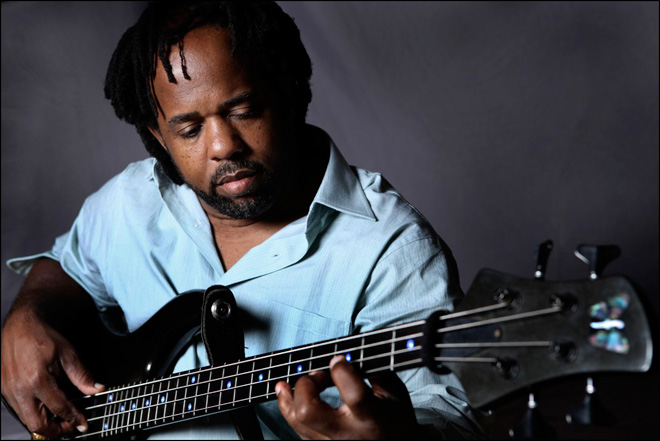
Music as a language - Victor Wooten

Music is a powerful communication tool - it causes us to laugh, cry, think and question. Bassist and five-time Grammy winner, Victor Wooten, asks us to approach music the same way we learn verbal language - by embracing mistakes and playing as often as possible.


Info from TEDed Lessons worth sharing
NOTE that this video has subtitles available in portuguese!

sexta-feira, 30 de janeiro de 2015

12 Amazing things scientists discovered about MUSIC - part I

In 2014, scientists looked closer than ever before at why exactly music makes us feel so powerfully. And they found some amazing and unprecedented things.

Studies revealed that music can shape our personalities and behaviors. It can help us choose our sexual partners. And it can be used to cure certain ailments. The deeper researchers dig, the more we realize how powerful of a force it truly is. 

And these findings could not have come at a more perfect moment in time: School systems continue to slash arts and music budgets around the country and the war over how much we pay for music is fundamentally a question of how much we value music. In this crucial year, scientists delivered infallible reminders of what any music lover already knew: Music is more than just entertainment. 

Here are 12 amazing things we discovered about MUSIC this year:

1. Learning an instrument at a young age can provide improved executive function.

Researchers at Boston Children's Hospital found that early musical training helps children improve their executive functions. Executive functions are incredibly important; they enable people to retain information, regulate behavior and solve problems more effectively. 

Children that started playing music at age 6 showed enhanced activation in the prefrontal cortex, the part of the brain that owns executive functions. And they performed far better than control groups on tests requiring them to shift between mental demands. Executive functioning is also a "strong predictor of academic achievement, even more than IQ," said study senior investigator Nadine Gaab. "Our findings suggest that musical training may actually help to set up children for a better academic future."


2. Rhythmic ability has been linked to language learning.

One of the first skills that children need to acquire when learning to read and speak is how to pick up on the rhythms of speech. They gain this ability to detect rhythms and define boundaries between words and syllables long before they can actually speak. So having a good sense of rhythm is very important to learning language. This year, we discovered just how important it really is.

Developmental psychologists at Northwestern University found that testing children for this rhythmic ability is a good way to detect potential language-based disabilities that may hit children later in life. Those that can hold an even drum beat score also higher on early language tests. The study's authors suggest that parents and educators use rhythmic tests to try to identify and address any possible linguistic deficiencies while children's brains are still young and malleable.


3. Music training can help close the achievement gap.

Nina Kraus, a Northwestern researcher also involved with the previous study, found that music can be vital in helping schools close the achievement gap — the massive inequality in academic performance between students from different socioeconomic backgrounds.

Kraus studied the neural activity of kids beginning their music education while working with the Harmony Project, a nonprofit after-school program that teaches music to children in low-income communities in Los Angeles. Using EEGs, Kraus found that brainwaves of disadvantaged children were "noisier, weaker and more variable" in responding to verbal stimuli than children from more privileged backgrounds. 

But after two years of musical training, she discovered something very different. She found that students with musical training had gotten much better at making clear neural responses to consonants and vowels. This faster processing power will likely have huge benefits for these children's language acquisition and concentration. Music might be one of most effective ways to help give children from disadvantaged backgrounds the cognitive tools they need to escape poverty.


4. It can combat ADHD.

Three scientists from the University of Graz uncovered a startling pattern in a recent longitudinal study investigating what musical learning does to a brain's plasticity. It turns out that kids who learn music boasted significantly thicker grey matter in brain areas linked to attention and concentration. The kids also demonstrated enhanced right-left hemispheric synchronization, which led to high scores on attentional, linguistic and literacy tests. 

In short, musical training builds the same brain structures that are markedly deficient in neural scans of children suffering from ADHD. The scientists hypothesized that early music training can be major benefit to helping children reduce the negative impacts associated with ADHD.

Info from Music.Mic